
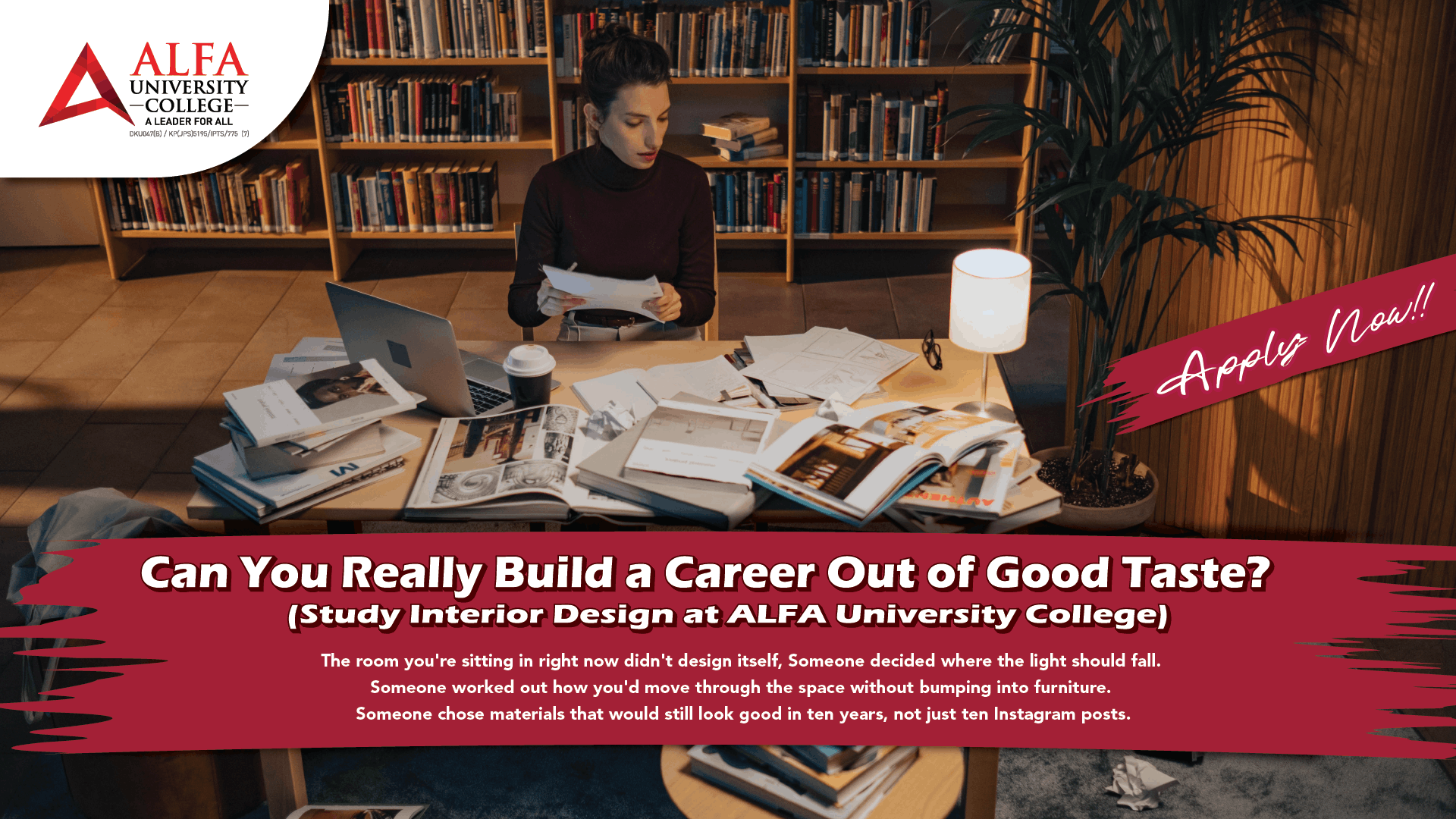
The room you’re sitting in right now didn’t design itself
Someone decided where the light should fall. Someone worked out how you’d move through the space without bumping into furniture. Someone chose materials that would still look good in ten years, not just ten Instagram posts.
That’s Interior Design. And it’s a lot more than picking cushions.
Why Interior Design, Why Now?
Every new home, office, café, clinic and hotel needs someone who understands how people actually use space, not just how it looks in a photo.
As buildings get smarter, spaces get more flexible, and people care more about wellbeing at home and at work, that skill isn’t going anywhere. It sits right at the intersection of creativity and practicality, which is exactly why it’s worth taking seriously as a career, not just a hobby.
What Students Actually Learn
Interior Design isn’t just sketching pretty rooms. Students build a genuine toolkit:
- Space planning working out how a room should function before it looks good
- Materials and construction knowledge understanding what’s actually buildable, safe and durable
- Technology using design software to plan, model and present ideas clearly
- Visual communication turning an idea in your head into a drawing someone else can understand and approve
- Problem-solving fitting a client’s needs, budget and building limits together
- Understanding people how someone with a young family, a disability, or a small business will actually live or work in a space
This is design thinking with real constraints. Creative, but disciplined.
From Ideas to Real Spaces
It starts with a concept sketch. Then a floor plan. Then material choices, lighting decisions, and technical drawings that a builder could actually follow.
Students learn to take a rough idea and develop it, stage by stage, into something that could genuinely be built, solving problems along the way, not just decorating a mood board.
Career Possibilities
Interior Design opens doors into several realistic paths, including:
- Interior designer at a design or architecture firm
- Space planner for commercial or residential projects
- Set or exhibition designer
- Furniture and materials specialist
- Freelance or self-employed design consultant
- Roles in property development and renovation
It’s a skill set that travels into design studios, construction-adjacent roles, and entrepreneurship.
Why ALFA University College?
At ALFA University College, Interior Design is taught as a professional discipline combining creative development with the practical, technical and communication skills the industry actually asks for.
The focus is on building students who can think like designers and work like professionals: capable of taking a brief, developing it properly, and presenting it with confidence.
For Parents: Is Interior Design a Practical Career Choice?
Fair question and a reasonable one to ask.
Interior Design isn’t “just art.” It combines technical knowledge (materials, construction, space planning), digital skills (design software), and professional skills (client communication, project management, problem-solving under real constraints).
These are transferable, employable skills useful whether your child ends up designing homes, working in property, running their own studio, or moving into a related creative or technical field.
Ready to Take the Next Step?
If you’re curious whether Interior Design could be the right path for yourself or for your child don’t just wonder about it.
Get in touch with ALFA University College today and find out more about the Interior Design programme, what it involves, and where it could take you.