
Do you enjoy working with numbers but want a career that goes beyond bookkeeping? If that question sounds familiar, you’re not alone. Many students who are good at maths assume an accounting or finance career means sitting behind a desk running calculations all day. In reality, it’s a field built on judgement, strategy and problem-solving and it opens doors across banking, investment, corporate management and entrepreneurship.
This article looks at what studying Accounting & Finance actually involves, the skills it builds, and why it’s worth serious consideration for SPM, O-Level, foundation and diploma students planning their next step.
Why Accounting & Finance Remains Relevant
Every organisation, from a small local business to a multinational corporation, needs people who understand how money moves, how decisions get made, and how risk is managed. That need doesn’t go away, it shifts and grows as businesses change.
Accounting & Finance graduates aren’t limited to one industry. The core skills reading financial information, evaluating risk, and making sound recommendations are needed in banking, investment, retail, manufacturing, technology, healthcare and government. This breadth is part of why the field continues to attract students who want options rather than a single narrow path.
What Students Can Learn
An Accounting & Finance education isn’t just about memorising formulas or accounting standards. Over the course of study, students build an understanding of:
- How businesses generate, manage and report money
- How financial statements tell the story of a company’s health
- How investment decisions are evaluated and justified
- How regulations and ethics shape financial practice
- How to interpret data to support real business decisions
The technical knowledge matters but it’s the ability to apply that knowledge to real situations that makes graduates valuable.
Practical Skills Students Can Develop
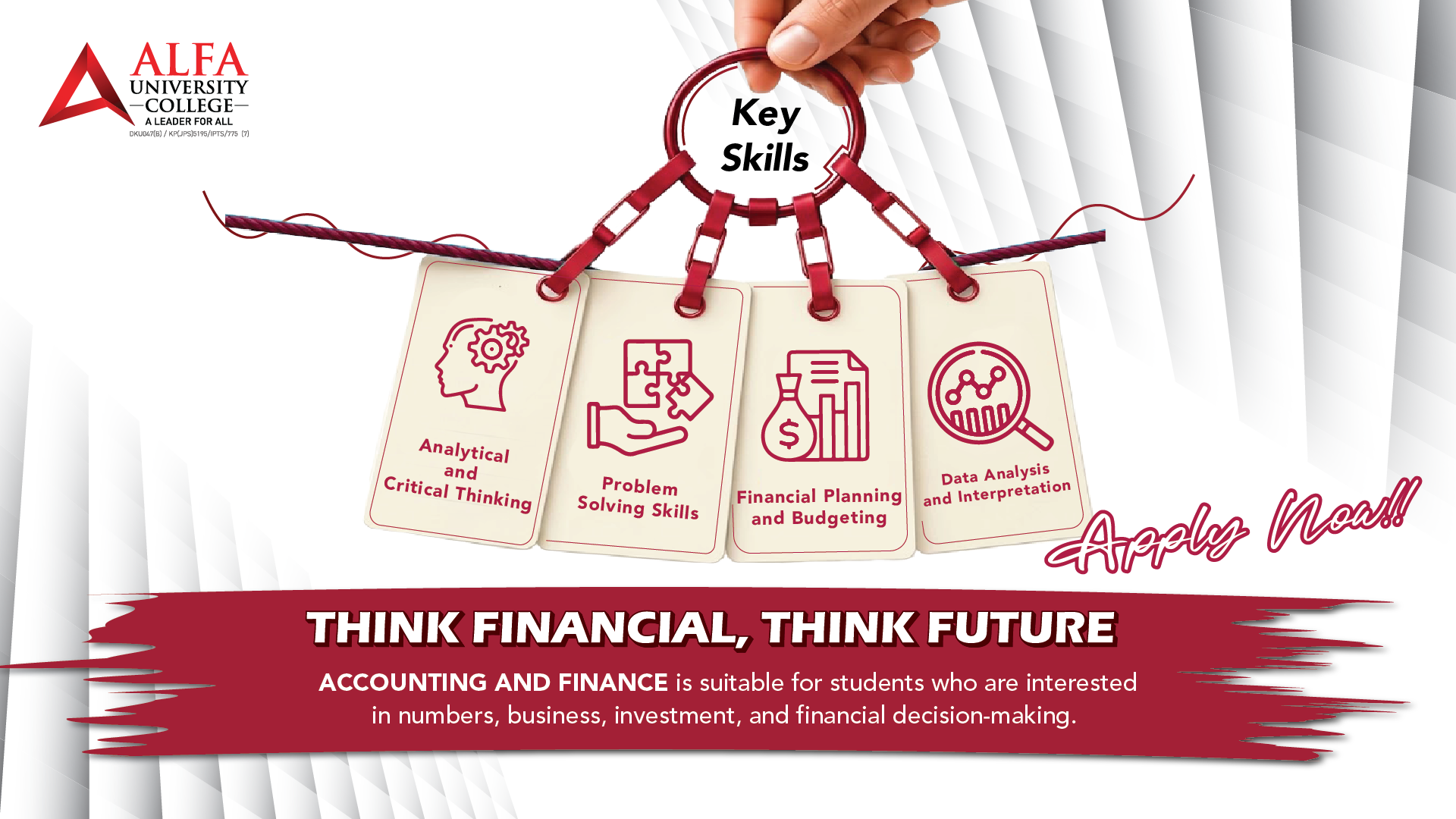
Beyond subject content, an Accounting & Finance programme is where students sharpen abilities that carry into almost any career:
- Analytical Thinking: Learning to break down complex financial information into clear insights a skill useful whether you’re evaluating a company’s performance or your own household budget.
- Decision-Making: Finance is rarely about a single “correct” answer. Students learn to weigh options, assess risk, and recommend a course of action with confidence.
- Problem-Solving: From spotting discrepancies in financial records to figuring out why a budget doesn’t balance, problem-solving is a daily skill in this field.
- Professional Communication: Numbers only matter if you can explain what they mean. Students learn to present financial information clearly to people who may not have a finance background.
How Accounting Connects With Modern Business and Technology
Accounting and finance don’t exist in isolation from the rest of a business. Finance teams work closely with marketing, operations and management to guide decisions from pricing a new product to deciding whether an investment is worth pursuing.
Technology has also changed how financial work gets done. Spreadsheets, accounting software and data tools are now part of everyday practice, and students who are comfortable working with these tools are better prepared for the realities of a modern workplace.
Potential Career Pathways
An Accounting & Finance background can lead in several directions, including:
- Accounting and auditing preparing and reviewing financial records
- Corporate finance supporting business planning and financial strategy within a company
- Banking: working in retail, commercial or corporate banking roles
- Investment and financial analysis evaluating opportunities and managing portfolios
- Business and management roles using financial literacy to support broader business decisions
Because the skills are transferable, graduates aren’t boxed into one job title, the same foundation can support very different careers over time.
Why This Programme Can Appeal to Parents
For parents, a degree that combines strong technical grounding with practical, transferable skills is often reassuring. Accounting & Finance is a field where the demand for capable graduates tends to be steady, and where a degree can support multiple career directions rather than a single narrow one.
It also gives students a professional foundation, the kind of analytical and financial literacy that’s useful even if a graduate later moves into a different field, starts a business, or takes on managerial responsibility.
Why Students May Consider Studying at ALFA University College
Choosing where to study is as important as choosing what to study. At ALFA University College, students pursuing Accounting & Finance are taught with a focus on practical understanding not just passing exams, but genuinely grasping how financial and business decisions work in the real world.
Conclusion
Studying Accounting & Finance is about far more than crunching numbers. It’s a pathway to developing the analytical thinking, decision-making and professional confidence that businesses across every industry rely on. Whether your goal is a career in banking, corporate finance, investment or business leadership, this field gives you a foundation that travels with you.
Take the Next Step
If you’re ready to explore where an Accounting & Finance education can take you, reach out to ALFA University College today to learn more about entry requirements, programme structure and how to apply. Apply Now